
Like a schoolboy meeting his idol, today unravels into something rather special!
Passing the King Edward Memorial we start our travel day with a visit to an ATM, it’s been nearly two weeks since we needed to top up with cash, and really we’re not using much, but extra tours, tips, Easter chocolate etc all need funding. After that it’s a relatively straight drive towards Agra, but there’s no slick modern highway.

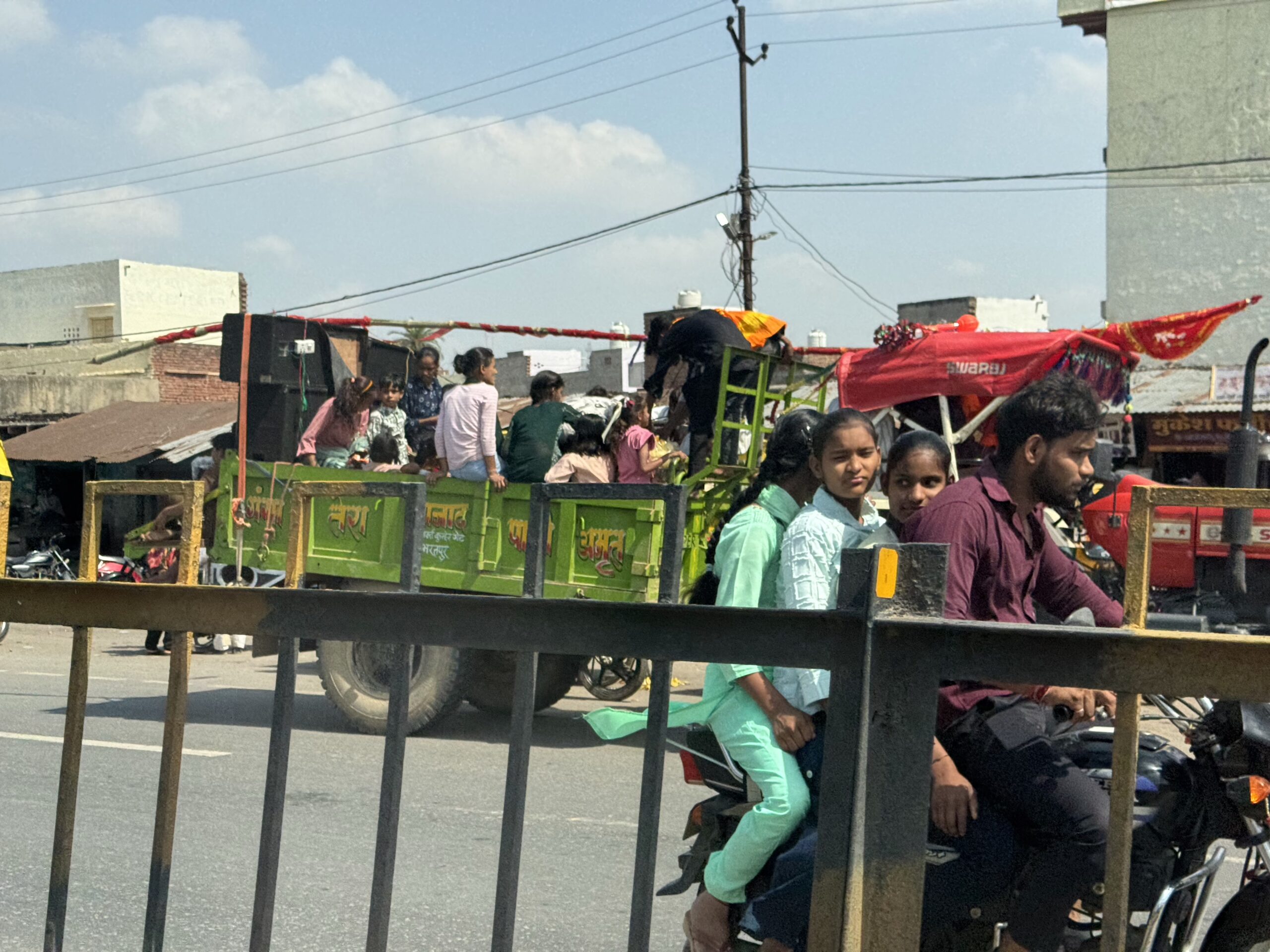
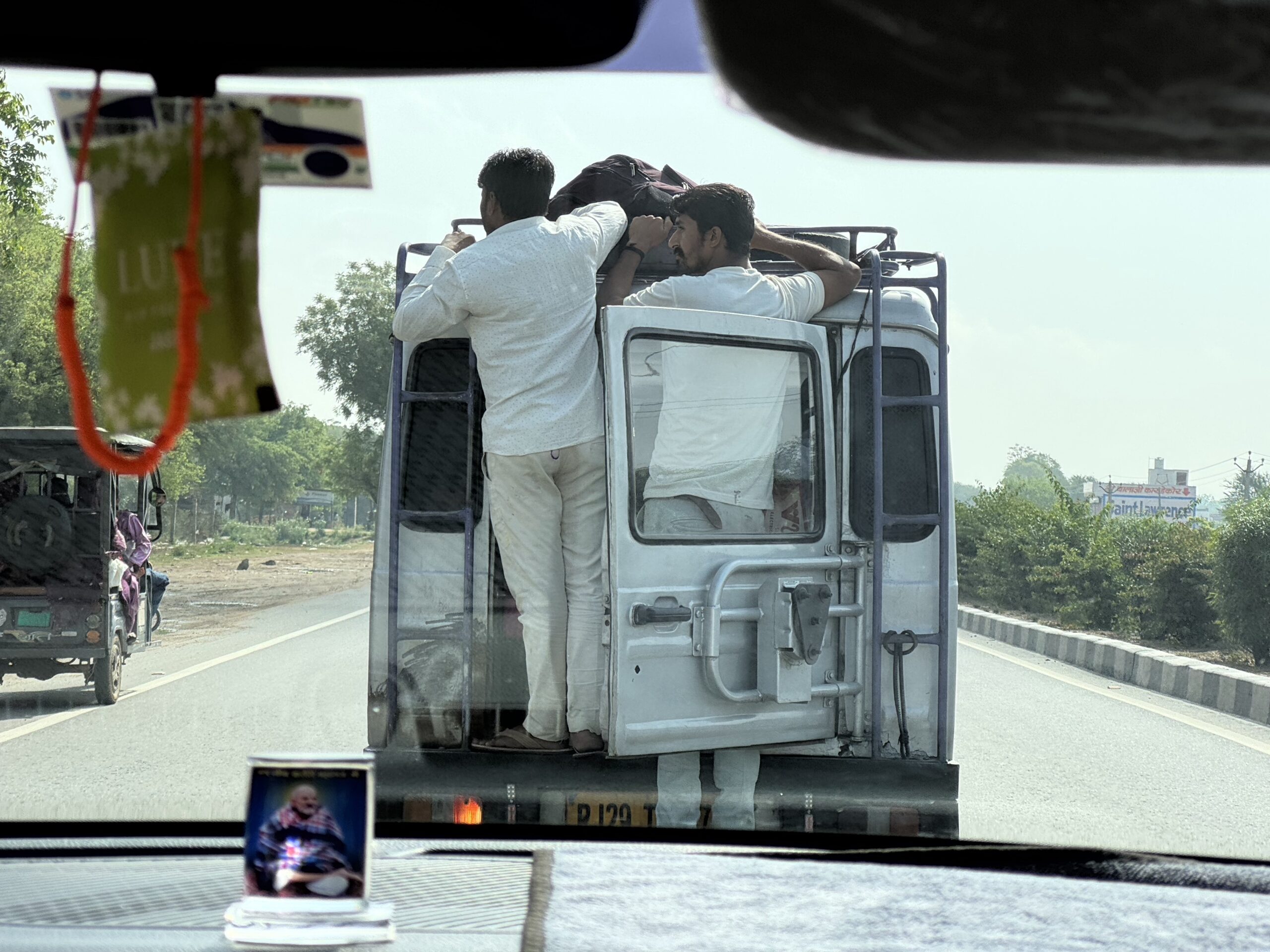
In fact today’s a good day to talk about driving, Indian style. Most roads we use are double lane, so two up and two down, one might even say a slow lane and a fast lane. However that is a really innocent, let’s say European assessment. In fact the left hand lane is usually full of tuk tuks, rickshaws and scooters, so anything larger like a lorry, tractor or bus is gong to hog the fast lane. This leaves cars and more powerful scooters and bikes to weave in between all the above at will, accompanied by a blaring horn (and answered with at least two others) – only a couple of feet either side is needed to make a rapid lane change.
Additionally, any traffic that wants to go a short distance doesn’t bother to cross the carriageway it just goes the wrong way down the slow lane. And finally, if your carriageway is too busy, just use the other one, but this time the fast lane, obviously because it’s nearer!
All the above is about straight-line driving. When it comes to junctions there is less structure – lanes no longer exist, roundabouts can be taken in either direction, and the possibility of people, goats, dogs or cows also crossing is increased.
Also to be discussed is overloading. Unless a vehicle has double it’s obvious capacity it’s not considered full. We often see four on a scooter, 12 in a tuk tuk and many more in a car or SUV.



After around two hours of progress we turn off the main road into a very small town. After a few miles we come across the village of Abhaneri, and a car park with no busses only a handful of cars like ours – SUVs with a driver. We’re here to view MC Escher’s finest works – no not really, but the similarity is amazing and I cannot help but be super-excited by this. Even if you don’t recognise the name you’ll know some of his wonderful trompe l’oeil drawings.
Built between the 8th and 9th centuries, this is a stepwell – basically an upside down pyramid built 100m into the ground on 13 floors with 3500 steps. Called Chándal Baori, it’s purpose is to allow water to be reached in times of shortage, and serve many people all at the same time. This site is considered to be the best in northern India and one of the best in the world.
Three sides have the fabulous geometric steps, the fourth is sheer and contains palatial rooms to allow the king to enjoy the cooler air lower down, often 6 or more degrees lower than surface temperature.


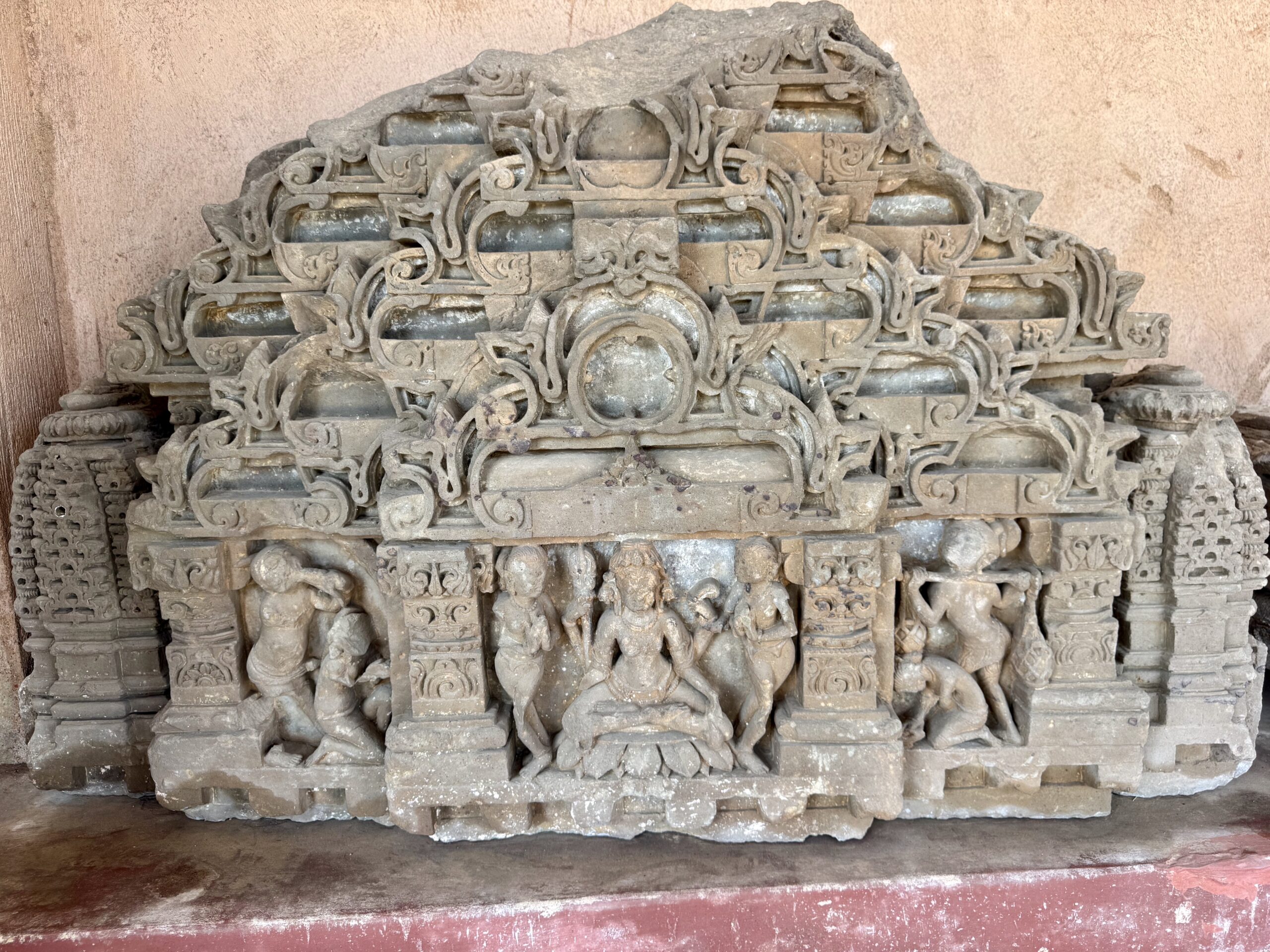

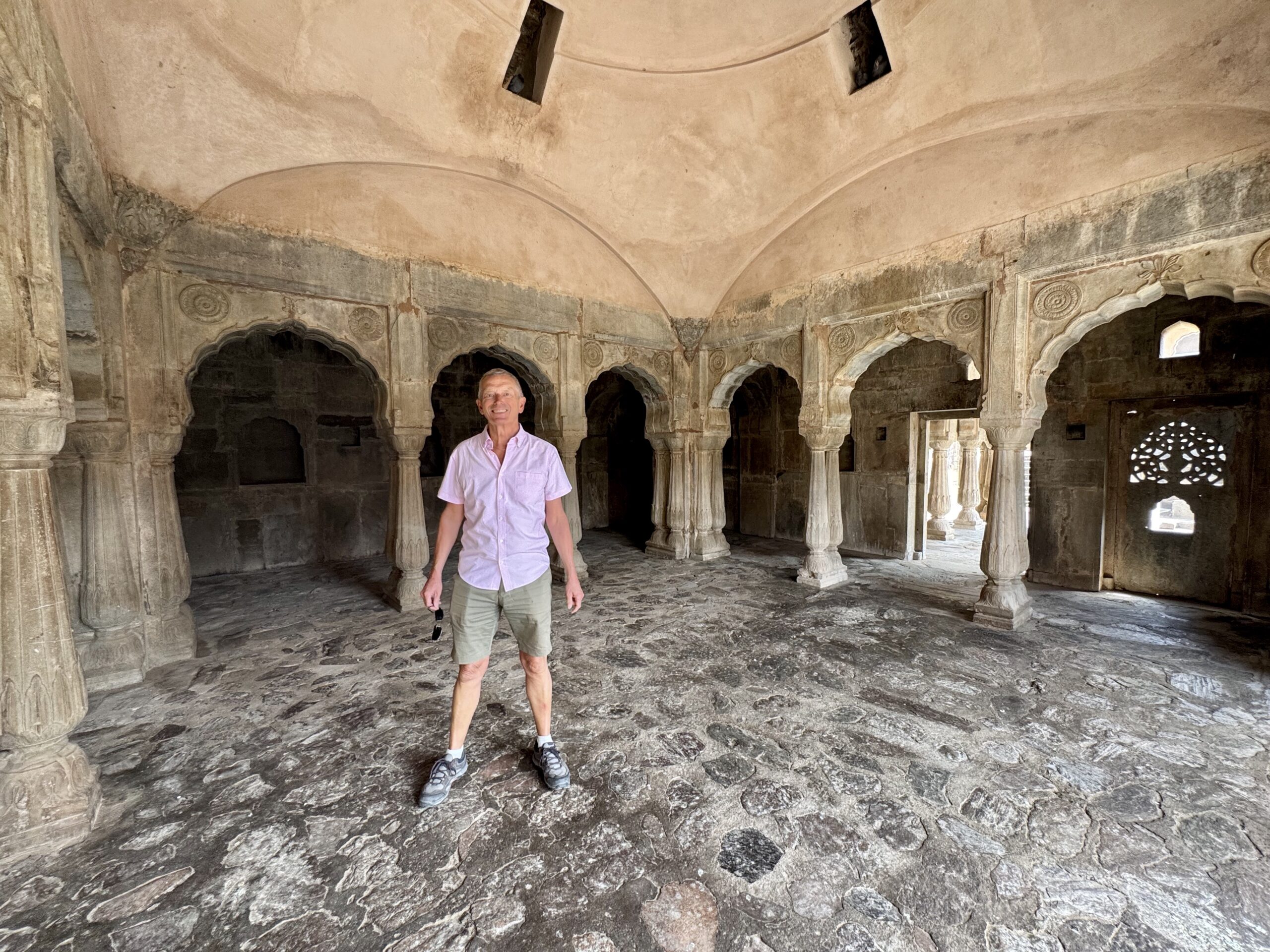
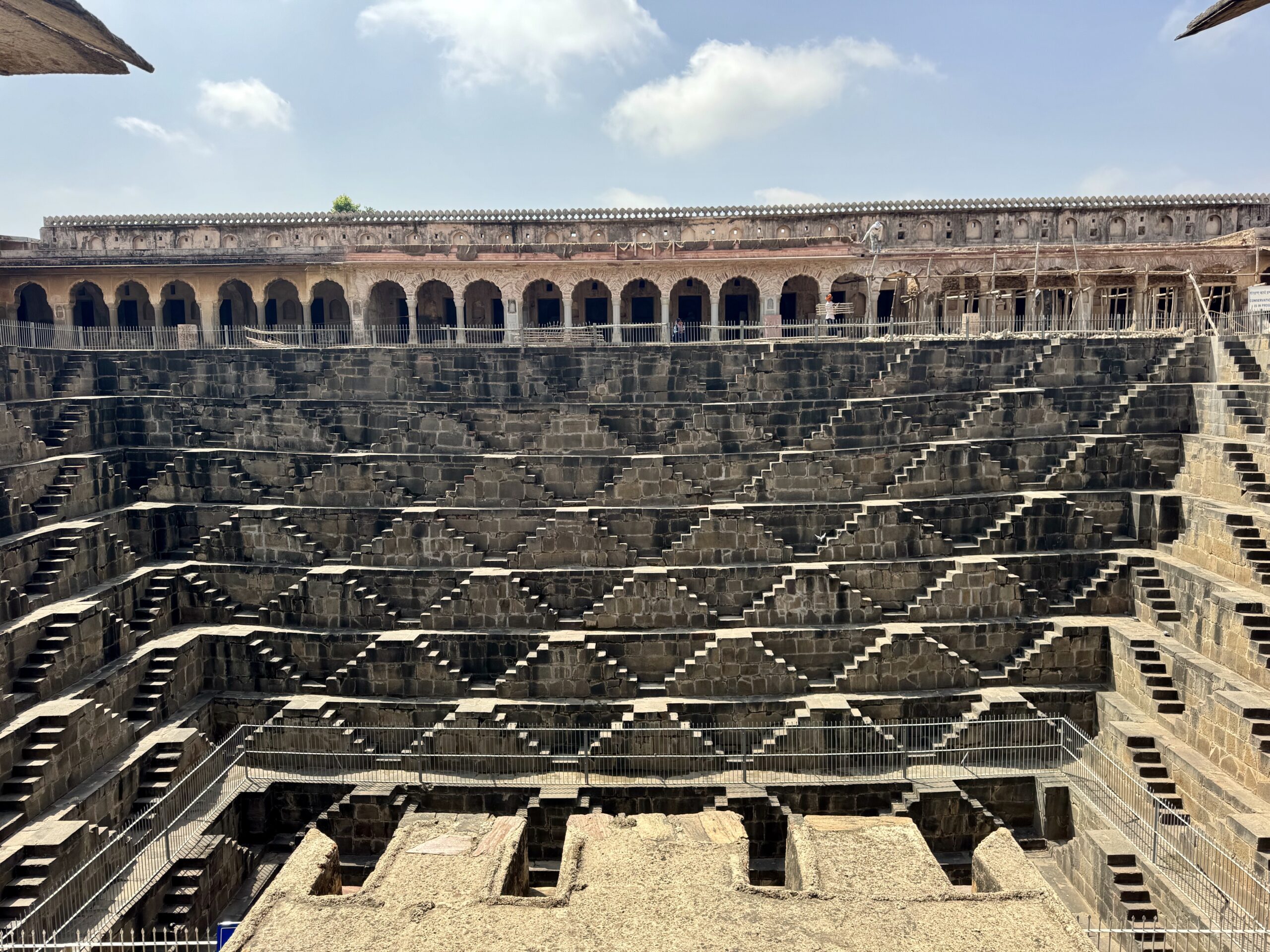
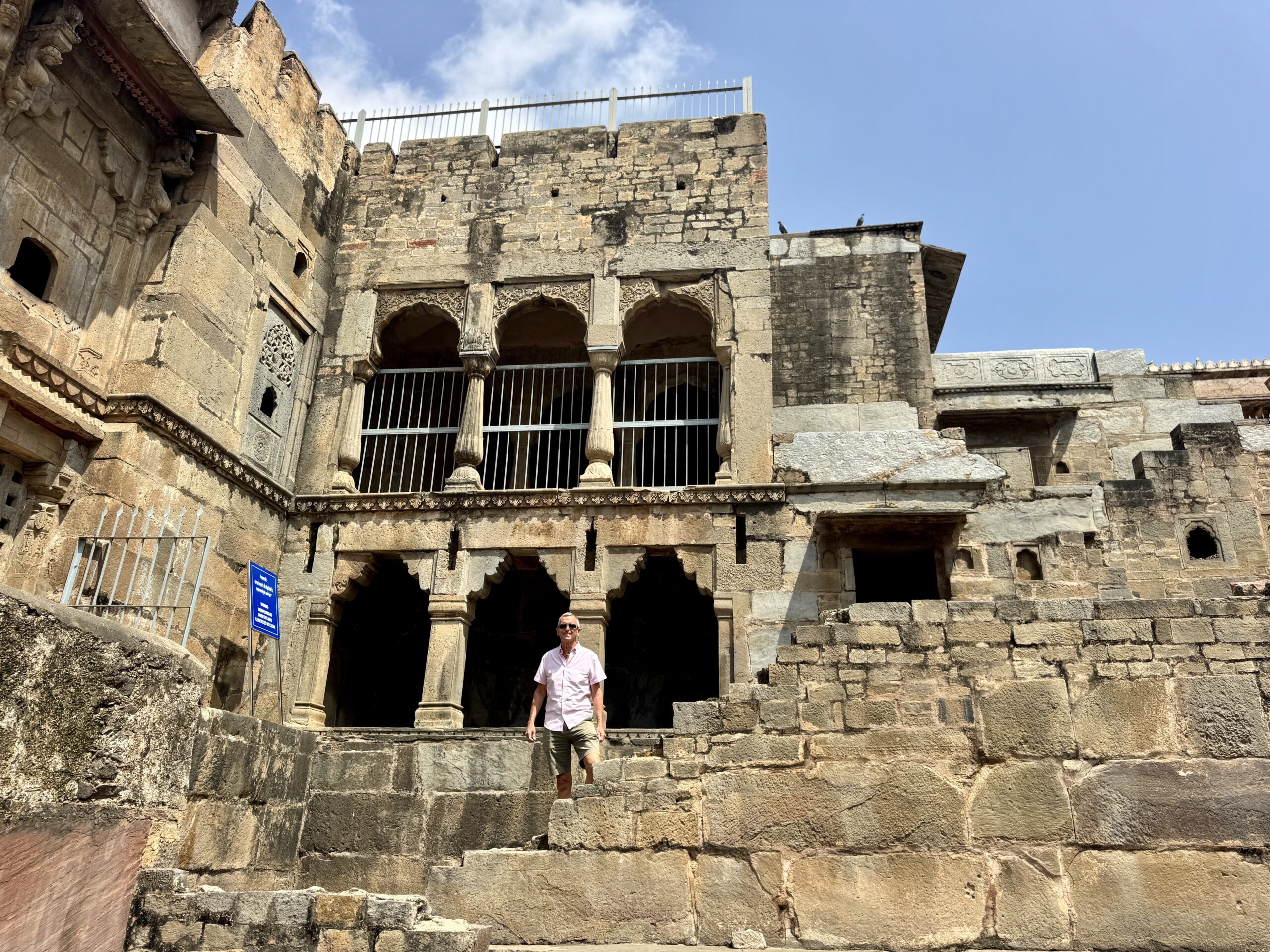


Right next door is Harshat Mata Temple, older by a good century, which has sadly been sacked by Mugals and is presently being archived and slowly restored.


We didn’t talk about the dung. Locals will pick up the deliveries, and dry them in the sun. These make excellent fuel for the cooler months, odour free and with a high calorific value. The huts are also dated in dung with patterns carefully crafted.


After this joyous interlude we’re back on the main road heading towards Agra. Most people will consider this stop to be the highlight of our journey. The opportunity to visit Taj Mahal is right up there in the Indian touring hit-list. However that’s for tomorrow, today we get settled into our hotel, visit the pool but don’t go in, it’s far too noisy, get some work done and then dress early as we’re an appointment uptown.
We’re driving into town when Narendra suddenly announces there’s a great tea shop nearby, so we slalom across the road into a one way section, going the wrong way of course, until we park up next to the tea shop, he dashes out and returns with earthenware cups of excellent chai. We drive off, presumably our driver returns the cups later?

Then it’s to the Kalakriti Cultural Centre where we watch a music and dance interpretation of the story of Taj Mahal. It’s very entertaining and quite special.


You’ll have noticed I haven’t been waxing lyrically about the food so far? It’s fair to say this is not a culinary experience vacation. We have nevertheless had some great food, but it’s mostly been curry-based or western-and-not-so-exciting. Out hotel in Agra is a cut above and offers a fabulous collection of sushi, Italian, and other cuisines alongside the traditional Indian choices.
